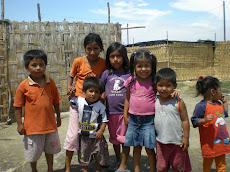
This is a report and photos taken by Maria Anne Moore of her recent visit to the Andean village of Chiara in Apurimac Peru.
Visit to Chiara October – December 2010
From October to December of 2010 I was fortunate enough to be able to spend time in Chiara carrying out initial field research related to my PhD in Public Health. I would like to sincerely thank Claudio Chipana of Peru Apurimac Project for the invitation to his village and also the chiarinos who without exception made me very welcome in their community from the outset. In particular I would like to mention Marisol Buleje, Coordinator of the Mother’s Club, who not only took it upon herself to ensure the women in the Mother’s Club kept me well fed throughout my visit, but was an excellent friend to me during my stay. In addition, I would like to thank the staff of the Posta de Salud Chiara (health clinic) – Doctora Jeannette; José Luis, the Obstetrician; Yanet and Inés, the nurses - who allowed me to observe them in their duties, answered my many questions with infinite patience and also permitted me to make the Posta my home for 3 months.
During my stay, the people of Chiara told me on many occasions how grateful they were for the work carried out by Peru Apurimac Project, a charity organization set up in London in 2001 by Claudio Chipana and Judith Grimsdell. They asked me to express their gratitude to everyone who works with, or has supported the project in the past. They are extremely grateful for the recent donations received from PERUAP and in particular wish to extend their thanks to Claudio for never forgetting his community back home, despite having lived in London for many years now.
Based upon my experiences in Chiara, I have summarised below the main difficulties and problematic areas currently experienced by the chiarinos in the hope that it may act as a guide for the future allocation of donations and funds raised and encourage all of us to continue to support the excellent work done by PERUAP.
• Health Care (Maternal and Child Health)
• Transport (Infrastructure and Road Safety)
• Environment (Recycling, Rubbish and Reforestation)
• Community (Club de Adulto Mayor, Community Meeting Place, Club de Madres)
Health Care
The top Public Health priority identified by DISA (the Regional Health Authority) in the Apurímac region is Maternal and Child Health. Currently, although the Posta (clinic) in Chiara has a delivery room, the clinic lacks the necessary equipment to adequately care for newborns in difficulties. Accordingly, all births must take place in the Centro de Salud Huancaray (Huancaray Health Centre). This is a two hour drive away. The Posta has no ambulance of its own, which often means that heavily pregnant women and indeed any emergency patient needing to be transferred to Huancaray or Andahuaylas Hospital (a further two hours away) needs to be sent by combi (a mini bus). The village desperately needs an ambulance of its own. The recently elected Mayor, Nicanór, is currrently discussing the possibility of obtaining an ambulance from DISA. However, even if the ambulance is obtained, money will still be needed to pay for a driver and petrol as well as maintenance costs.
Childhood malnutrition is a serious problem affecting 25% of children in Chiara according to statistics compiled by DISA in December 2010. Whilst to some extent this may be due to poor diet, undoubtedly parasitic infection plays a part. The Posta lacks the necessary laboratory resources to carry out an effective deparasitation campaign. Again, the Mayor is investigating the possibility of organising a deparasitation campaign in 2012 with the assistance of NGO’s working in the area. Resources will however be needed to purchase medicines not available through the SIS (Health Insurance).
Transport
Last year, the roads leading to Chiara were widened and improved. However these improvements have not been reciprocated with respect to public transport. Chiara remains without a taxi service to transport people and goods to and from Andahuaylas, the regional capital. Three combi companies operate the only service connecting Chiara to the capital. Unfortunately there have been many accidents recently, in the course of the last 18 months despite improvements to the road. In October 2009 5 people were fatally injured in a combi accident as the bus was descending the mountain pass to Chiara. I was also involved in an accident in November 2010. I urge the owners of the combi companies to assume their responsibilities in respect to road safety and also ask the authorities to ensure that road safety is given top priority. What is the point of improving the road if the combis that travel along it are unsafe or are driven dangerously? Perhaps PERUAP, being a well respected organisation in Chiara can also bring pressure to bear on this point.
Environment
During my stay in Chiara much work was done on reforestation of the hillsides surrounding Chiara, which have suffered the consequences of deforestation over the years due to the constant use of wood burning stoves in the town. Several faenas or minkas (community work) were called by Señor Mercedio, the Community President and other village authories. Even the pupils in Secondary school participated over two days,digging holes for the trees to be replanted.
Unfortunately, it has to be noted that at present the Muncipality, after collecting the rubbish from the village, simply discards it on the mountainside a few kilometres from Chiara. Much of this rubbish is non biodegradable (plastic bottles and bags, tin cans etc.) but could easily be recycled. Facilities do not exist in Chiara to do this, but perhaps with support and encouragement the Municipality could be persuaded to transport the rubbish for recycling to Andahuaylas or the nearest recycling facility. At present, the current situation, apart from being an eyesore on what is otherwise a beautiful landscape, poses a health risk as the rubbish dump is in close proximity to a nearby stream and water supply.
Last year in Andahuaylas several nearby communities implemented the use of “cocinas mejoradas” (improved stoves). This consists in adapting the existing open wood burning stove to incorporate a metal chimney which effectively funnels the wood smoke out of the living quarters and into the open air. This can only have a positive effect on health, in a community where many inhabitants,particularly the elderly suffer from acute respiratory infections. The cost of adapting the stoves is minimal, but highly beneficial. Resources will be needed to purchase materials and pay for labour.
Community
The Club de Adulto Mayor (OAP’s Club) continues to grow in popularity in Chiara. The club is now looking for a venue in which to host its monthly meetings, having now outgrown its old meeting room in the Posta. The Club provides the opportunity for the older generation in Chiara to meet, discuss health issues with Doctora Jeanette, receive health advice from the Doctora and mutual support from each other, chat, relax, watch a DVD and dance lots of Huayno! The Club are committed to finding their own venue but will need assistance in possible renovation costs.
The community also need a communal meeting place. Building work has begun on a communal centre off the main square which has been funded by PERUAP. To date, only the first floor has been built and remains largely a shell. More funding would enable the community to complete the building, which would also provide the Club de Adulto Mayor with the perfect venue for their monthly meetings.
The Club de Madres (Mother’s Club) and Comedor Popular (Communal Kitchen) have also begun further construction work on sealing the roof structure in order to make it water tight. This work has also been funded wholly by PERUAP, but further resources are needed to complete the work.
Visit to Chiara October – December 2010
From October to December of 2010 I was fortunate enough to be able to spend time in Chiara carrying out initial field research related to my PhD in Public Health. I would like to sincerely thank Claudio Chipana of Peru Apurimac Project for the invitation to his village and also the chiarinos who without exception made me very welcome in their community from the outset. In particular I would like to mention Marisol Buleje, Coordinator of the Mother’s Club, who not only took it upon herself to ensure the women in the Mother’s Club kept me well fed throughout my visit, but was an excellent friend to me during my stay. In addition, I would like to thank the staff of the Posta de Salud Chiara (health clinic) – Doctora Jeannette; José Luis, the Obstetrician; Yanet and Inés, the nurses - who allowed me to observe them in their duties, answered my many questions with infinite patience and also permitted me to make the Posta my home for 3 months.
During my stay, the people of Chiara told me on many occasions how grateful they were for the work carried out by Peru Apurimac Project, a charity organization set up in London in 2001 by Claudio Chipana and Judith Grimsdell. They asked me to express their gratitude to everyone who works with, or has supported the project in the past. They are extremely grateful for the recent donations received from PERUAP and in particular wish to extend their thanks to Claudio for never forgetting his community back home, despite having lived in London for many years now.
Based upon my experiences in Chiara, I have summarised below the main difficulties and problematic areas currently experienced by the chiarinos in the hope that it may act as a guide for the future allocation of donations and funds raised and encourage all of us to continue to support the excellent work done by PERUAP.
• Health Care (Maternal and Child Health)
• Transport (Infrastructure and Road Safety)
• Environment (Recycling, Rubbish and Reforestation)
• Community (Club de Adulto Mayor, Community Meeting Place, Club de Madres)
Health Care
The top Public Health priority identified by DISA (the Regional Health Authority) in the Apurímac region is Maternal and Child Health. Currently, although the Posta (clinic) in Chiara has a delivery room, the clinic lacks the necessary equipment to adequately care for newborns in difficulties. Accordingly, all births must take place in the Centro de Salud Huancaray (Huancaray Health Centre). This is a two hour drive away. The Posta has no ambulance of its own, which often means that heavily pregnant women and indeed any emergency patient needing to be transferred to Huancaray or Andahuaylas Hospital (a further two hours away) needs to be sent by combi (a mini bus). The village desperately needs an ambulance of its own. The recently elected Mayor, Nicanór, is currrently discussing the possibility of obtaining an ambulance from DISA. However, even if the ambulance is obtained, money will still be needed to pay for a driver and petrol as well as maintenance costs.
Childhood malnutrition is a serious problem affecting 25% of children in Chiara according to statistics compiled by DISA in December 2010. Whilst to some extent this may be due to poor diet, undoubtedly parasitic infection plays a part. The Posta lacks the necessary laboratory resources to carry out an effective deparasitation campaign. Again, the Mayor is investigating the possibility of organising a deparasitation campaign in 2012 with the assistance of NGO’s working in the area. Resources will however be needed to purchase medicines not available through the SIS (Health Insurance).
Transport
Last year, the roads leading to Chiara were widened and improved. However these improvements have not been reciprocated with respect to public transport. Chiara remains without a taxi service to transport people and goods to and from Andahuaylas, the regional capital. Three combi companies operate the only service connecting Chiara to the capital. Unfortunately there have been many accidents recently, in the course of the last 18 months despite improvements to the road. In October 2009 5 people were fatally injured in a combi accident as the bus was descending the mountain pass to Chiara. I was also involved in an accident in November 2010. I urge the owners of the combi companies to assume their responsibilities in respect to road safety and also ask the authorities to ensure that road safety is given top priority. What is the point of improving the road if the combis that travel along it are unsafe or are driven dangerously? Perhaps PERUAP, being a well respected organisation in Chiara can also bring pressure to bear on this point.
Environment
During my stay in Chiara much work was done on reforestation of the hillsides surrounding Chiara, which have suffered the consequences of deforestation over the years due to the constant use of wood burning stoves in the town. Several faenas or minkas (community work) were called by Señor Mercedio, the Community President and other village authories. Even the pupils in Secondary school participated over two days,digging holes for the trees to be replanted.
Unfortunately, it has to be noted that at present the Muncipality, after collecting the rubbish from the village, simply discards it on the mountainside a few kilometres from Chiara. Much of this rubbish is non biodegradable (plastic bottles and bags, tin cans etc.) but could easily be recycled. Facilities do not exist in Chiara to do this, but perhaps with support and encouragement the Municipality could be persuaded to transport the rubbish for recycling to Andahuaylas or the nearest recycling facility. At present, the current situation, apart from being an eyesore on what is otherwise a beautiful landscape, poses a health risk as the rubbish dump is in close proximity to a nearby stream and water supply.
Last year in Andahuaylas several nearby communities implemented the use of “cocinas mejoradas” (improved stoves). This consists in adapting the existing open wood burning stove to incorporate a metal chimney which effectively funnels the wood smoke out of the living quarters and into the open air. This can only have a positive effect on health, in a community where many inhabitants,particularly the elderly suffer from acute respiratory infections. The cost of adapting the stoves is minimal, but highly beneficial. Resources will be needed to purchase materials and pay for labour.
Community
The Club de Adulto Mayor (OAP’s Club) continues to grow in popularity in Chiara. The club is now looking for a venue in which to host its monthly meetings, having now outgrown its old meeting room in the Posta. The Club provides the opportunity for the older generation in Chiara to meet, discuss health issues with Doctora Jeanette, receive health advice from the Doctora and mutual support from each other, chat, relax, watch a DVD and dance lots of Huayno! The Club are committed to finding their own venue but will need assistance in possible renovation costs.
The community also need a communal meeting place. Building work has begun on a communal centre off the main square which has been funded by PERUAP. To date, only the first floor has been built and remains largely a shell. More funding would enable the community to complete the building, which would also provide the Club de Adulto Mayor with the perfect venue for their monthly meetings.
The Club de Madres (Mother’s Club) and Comedor Popular (Communal Kitchen) have also begun further construction work on sealing the roof structure in order to make it water tight. This work has also been funded wholly by PERUAP, but further resources are needed to complete the work.